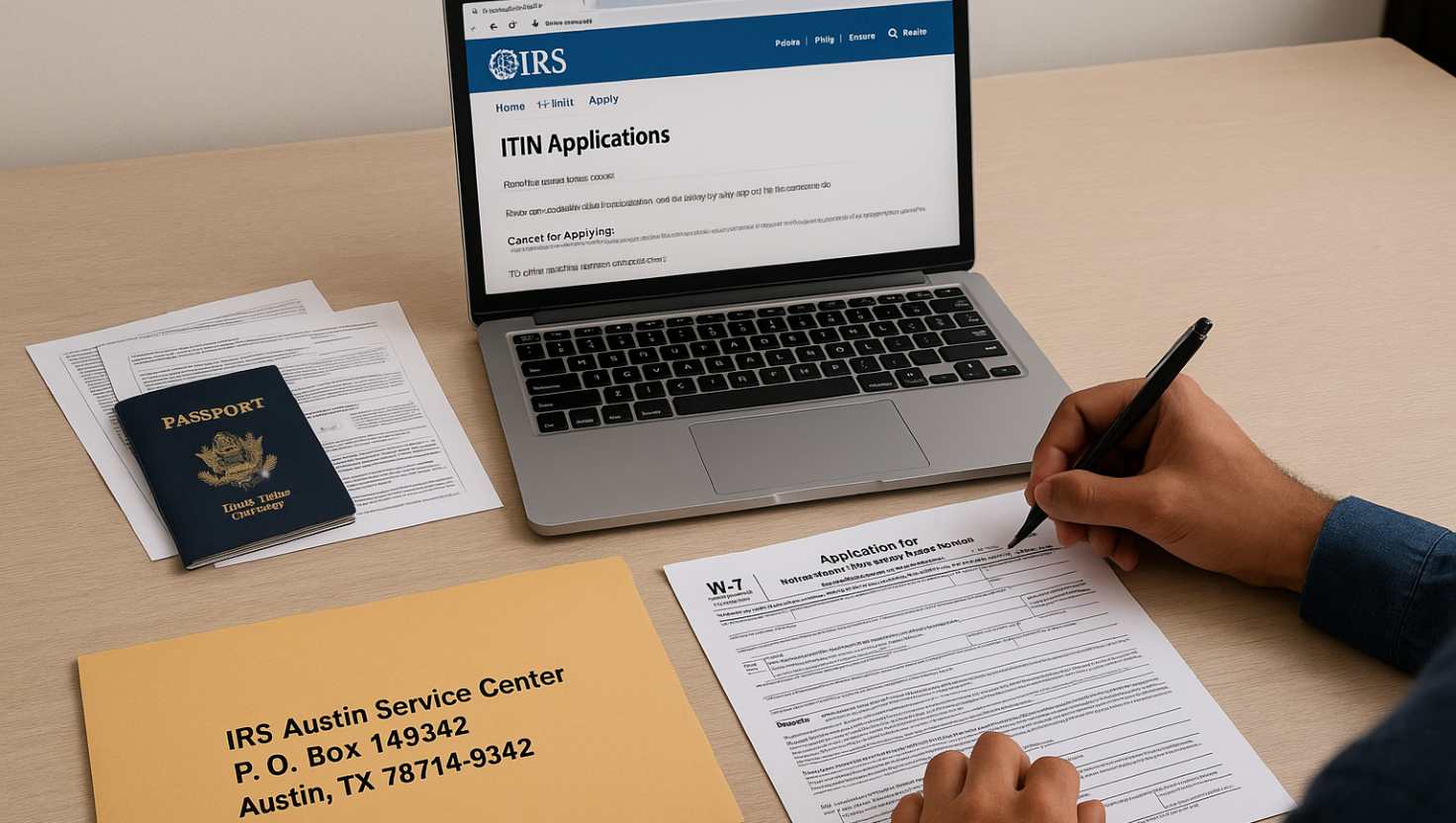
Obtaining an Individual Taxpayer Identification Number (ITIN) is crucial for non-U.S. citizens who do not have a Social Security number. This number enables them to file federal tax returns and access various tax benefits. The process of applying for an ITIN might seem complex, but understanding the steps can simplify the journey.
In this article, we will explore the various aspects of obtaining an ITIN for foreigners, including application methods, required documents, and the implications of losing an ITIN.
How can nonresident aliens get an ITIN before tax season?
For nonresident aliens, obtaining an ITIN before tax season is essential to ensure compliance with U.S. tax laws. The first step is to identify if you need an ITIN. If you are required to file a U.S. federal tax return but do not qualify for a Social Security number, you will need to apply for an ITIN.
To apply, you can submit Form W-7, which is the application for an ITIN. This form can be submitted through various channels: by mail, in person at an IRS Taxpayer Assistance Center, or through a Certifying Acceptance Agent (CAA). Each option has its advantages, but using a CAA may provide additional support in gathering required documents and understanding the application process.
It is advisable to begin the application process well in advance of the tax season. This allows for any potential delays and ensures your ITIN is ready when it is time to file your tax return. Remember that you will need to submit original documents or certified copies to prove your identity and foreign status.
How to apply for your ITIN from outside the US
Applying for an ITIN from outside the U.S. can be done efficiently by following a few essential steps. First, you must complete Form W-7 accurately. This form requires you to provide personal information, including your name, mailing address, and foreign status details.
Next, you need to gather the required documents. The IRS requires original documents or certified copies that verify your identity and foreign status. Acceptable documents include a foreign passport, national identification card, or U.S. driver’s license. It is crucial to provide at least one document with your photograph.
Once you have completed the form and gathered your documents, you can submit everything by mail to the IRS. Ensure to send it to the correct address specified for ITIN applications. You may also want to use a reliable mailing service to track your application.
What documents are required when applying for an ITIN?
When applying for an ITIN, specific documents are essential to support your application. The following items are typically required:
- Completed Form W-7: This is the application form for the ITIN.
- Proof of Identity: A foreign passport is commonly accepted.
- Proof of Foreign Status: This can also be covered by your foreign passport.
- Photo Identification: If you do not have a foreign passport, you will need at least one photo ID.
Be aware that documents must be original or certified copies. If you are submitting original documents, they will be returned to you, but you must ensure they are submitted as required. Always double-check that your documents meet the IRS guidelines to avoid any delays in processing your application.
How long does it take to get an ITIN number?
The processing time for an ITIN application can vary. Generally, the IRS states that it takes about 6 to 8 weeks to process Form W-7 and issue your ITIN. However, during peak tax season, this time frame may extend due to increased application volumes.
To expedite the process, ensure that all required documents are included and that Form W-7 is filled out correctly. Mistakes or missing information can lead to delays. If you applied through a CAA, they might provide assistance in tracking your application status.
If you have not received your ITIN after 8 weeks, you can contact the IRS for an update on your application. Keeping a copy of your submission and any correspondence is also a good practice.
What to do if your ITIN is lost or expired?
If your ITIN has been lost or expired, it’s important to act promptly. The first step is to locate any records that contain your ITIN. If you cannot find your ITIN, you may be able to find it on previous tax returns or IRS correspondence.
To recover a lost ITIN, you do not need to apply for a new one. Instead, you can call the IRS and request your existing number. They will ask for personal information to verify your identity.
In the case of an expired ITIN, you will need to renew it by submitting Form W-7 again. The renewal process is straightforward, but ensure that you meet the criteria for renewal, such as having used the ITIN on a federal tax return in the last three years. This helps maintain your eligibility for tax benefits.
Why do I need an ITIN?
An ITIN is necessary for several key reasons, especially for non-U.S. citizens. Here are some important reasons to consider:
- Filing Federal Tax Returns: An ITIN allows you to file taxes in the U.S. if you do not qualify for a Social Security number.
- Access to Tax Benefits: With an ITIN, you may be eligible for certain tax benefits, including tax treaty benefits.
- Compliance with IRS Regulations: Having an ITIN keeps you compliant with federal tax laws, avoiding potential penalties.
- Ability to Open U.S. Bank Accounts: Many banks require an ITIN for non-resident foreigners to open an account.
Thus, securing an ITIN is vital for managing your tax responsibilities and accessing various financial services in the United States.
What is an Individual Taxpayer Identification Number (ITIN)?
An Individual Taxpayer Identification Number (ITIN) is a unique identification number assigned by the IRS to individuals who are required to have a taxpayer identification number but do not qualify for a Social Security number. This number is specifically designed for tax purposes and allows individuals to comply with U.S. tax laws.
The ITIN is formatted similarly to a Social Security number, containing nine digits. It is important to note that an ITIN does not grant work authorization or provide access to Social Security benefits. Instead, it serves primarily to facilitate tax filing and reporting.
Obtaining an ITIN is crucial for those who need to file federal tax returns, ensuring that they remain compliant with U.S. tax regulations.
Related questions about the ITIN process
How can a non US citizen get an ITIN number?
To obtain an ITIN, a non-U.S. citizen must complete Form W-7 and submit it along with required documentation to the IRS. This includes proof of identity and foreign status. The application can be submitted by mail, in person at an IRS Taxpayer Assistance Center, or through a Certifying Acceptance Agent.
Can someone with an ITIN number work in the US?
No, an ITIN does not authorize an individual to work in the United States. It is solely a tax identification number that allows the holder to file taxes. Individuals looking to work in the U.S. must obtain the appropriate work authorization.
Is ITIN the same as SSN?
No, an ITIN and a Social Security Number (SSN) serve different purposes. An SSN is issued to individuals eligible to work in the U.S. and provides access to Social Security benefits. In contrast, an ITIN is designated for tax purposes for those who are not eligible for an SSN.
Can I file a US tax return without an ITIN?
Yes, you can file a U.S. tax return without an ITIN, but you will need to apply for one if you do not have a Social Security number. The IRS requires taxpayers who do not qualify for an SSN to use an ITIN to fulfill their tax obligations.